Why Precision Charting Matters More Than Order Execution Speed
For years, stockbrokers competed on one promise: faster order execution.
Lower latency, quicker confirmations, and high-speed trading infrastructure became the benchmark for evaluating trading platforms. While execution speed remains critical, it has gradually become a baseline expectation rather than a true differentiator. Today, virtually every leading broker offers fast and reliable execution.
So, what actually influences a trader's decision to stay on one platform over another?
The answer lies in precision charting.
Modern traders spend significantly more time analyzing markets than placing trades. A buy or sell order may take only a fraction of a second to execute. Still, the decision behind that trade is often built on minutes, or even hours, of chart analysis, technical validation, and market observation. In other words, execution speed may complete the trade, but precision charting drives the decision.
Execution Speed Wins Milliseconds. Precision Charting Wins Decisions.
Trading technology has evolved dramatically over the last decade. Improvements in infrastructure have reduced execution times to milliseconds, creating a level playing field across much of the brokerage industry.
However, traders rarely judge a platform solely by how quickly an order is executed. Instead, they evaluate how effectively the platform helps them identify opportunities, validate strategies, and manage positions.
This is where a stock charting platform becomes far more than a visualization tool. It becomes the trader's primary workspace.
Whether analyzing a breakout, confirming a trend, or comparing multiple timeframes, every decision begins with the chart, not the order button.
What Defines Precision Charting?
Precision charting is no longer limited to displaying candlestick charts. It has evolved into an interactive environment that combines technical analysis, market visualization, and trading workflows into a single experience.
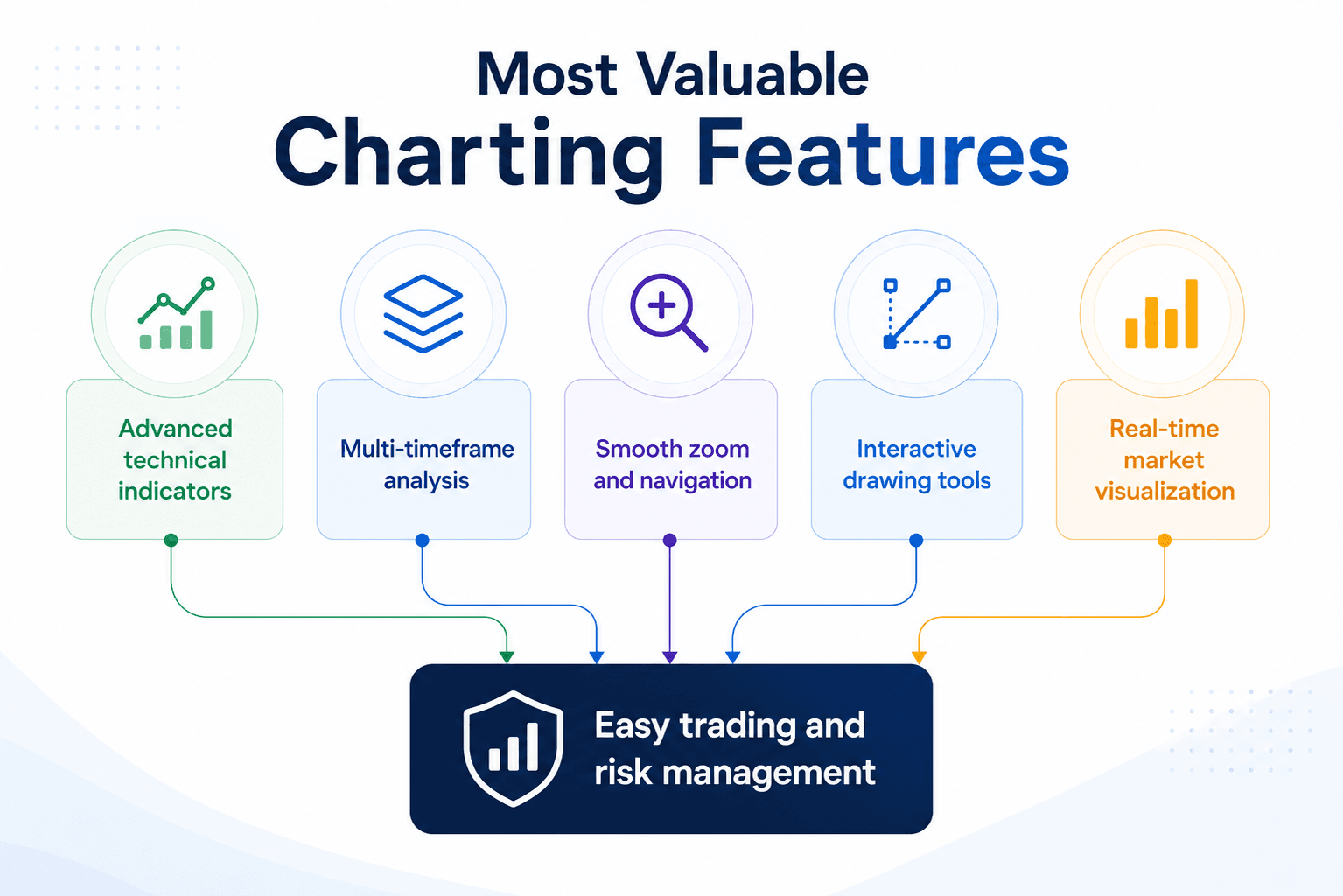
Some of the most valuable charting features include:
- Advanced technical indicators for deeper market analysis
- Multi-timeframe analysis to validate trading opportunities
- Smooth zoom and navigation for precise chart exploration
- Interactive drawing tools to identify trends and support/resistance levels
- Real-time market visualization for faster decision-making
These capabilities help traders spend less time navigating the platform and more time understanding the market.
From Analysis Tool to Trading Workspace
One of the biggest shifts in trading technology is that charts are no longer isolated from trading, they are becoming the trading workspace itself.
On mobile devices, constantly switching between watchlists, order windows, positions, and charts becomes cumbersome, making a unified workspace crucial for seamless trading.
This includes:
- Placing orders directly from the chart
- Managing stop-loss and target levels visually
- Monitoring open positions alongside live price action
- Tracking realized and unrealized profit and loss in real time
Reducing unnecessary screen changes minimizes friction and allows traders to stay focused on market movements rather than platform navigation.
Native Mobile Charting Is No Longer Optional
Today's traders don't always sit in front of multiple monitors. Many actively monitor and manage trades from their smartphones throughout the trading day.
Unfortunately, many platforms still treat mobile charting as a simplified version of their desktop experience.
Precision charting takes a different approach.
Instead of shrinking desktop interfaces onto smaller screens, it embraces mobile-first interactions such as intuitive gestures, responsive layouts, and seamless navigation. Features like pinch-to-zoom, fluid chart movement, and optimized touch interactions create an experience that feels natural on mobile devices.
As mobile participation continues to grow, mobile charting is becoming a key factor in trader satisfaction and platform adoption.
Better Charting Creates Better Trading Experiences
The best trading platforms don't simply execute trades; they help traders make better decisions.
A well-designed charting experience enables users to:
- Interpret market trends more efficiently
- Compare multiple timeframes with ease
- Validate trading strategies using technical indicators
- Respond quickly to changing market conditions
- Manage trades without disrupting their analytical workflow
This reduces cognitive load and allows traders to focus on what matters most - market opportunities.
In many cases, a better user experience can have a greater impact on trader engagement than marginal improvements in execution speed.
Why This Matters for Brokers
For brokers, investing in charting tools isn't just about adding another feature. It's about strengthening the overall value and experience of the trading platform.
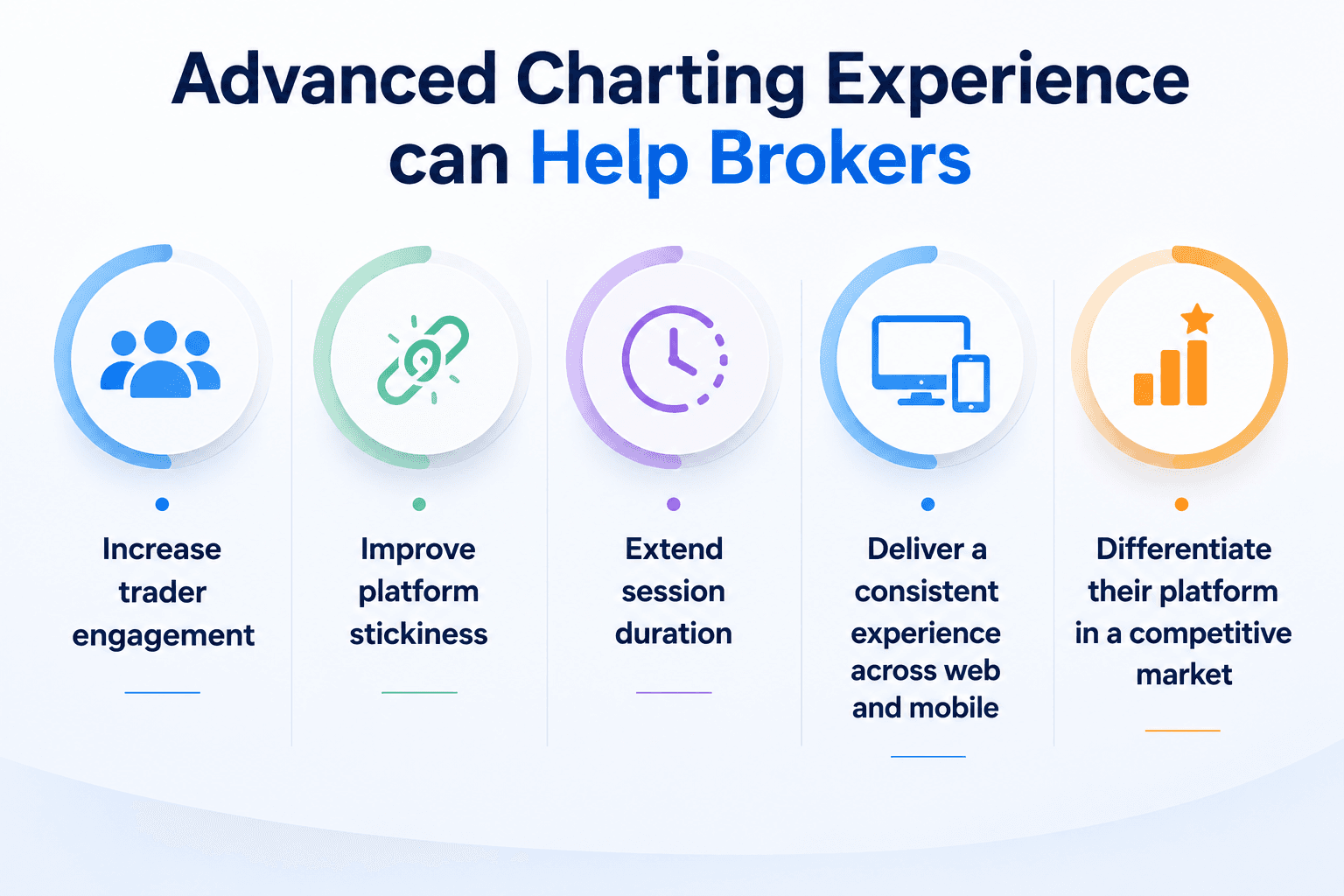
An advanced charting experience can help brokers:
- Increase trader engagement
- Improve platform stickiness
- Extend session duration
- Deliver a consistent experience across web and mobile
- Differentiate their platform in a competitive market
According to industry research, user experience has become a major factor influencing digital product adoption, making intuitive workflows and seamless interactions increasingly important across financial platforms.
As trading expectations evolve, brokers that prioritize modern charting will be better positioned to retain active traders and build long-term customer loyalty.
The Future of Trading Platforms
The future of trading platforms won't be defined solely by who executes trades the fastest.
It will be defined by who helps traders make the smartest decisions.
Precision charting brings together technical analysis, visualization, order management, and mobile-first experiences into one cohesive environment. It transforms charts from passive displays into interactive decision-making workspaces.
Execution speed will always matter, but it is no longer the feature that sets a platform apart.
For brokers looking to build the next generation of trading experiences, precision charting is no longer a value addition. It is becoming the foundation of a competitive trading platform.